Introduction to the CANDID Study
CANDID is designed to identify the most appropriate motor, cognitive and behavioral clinical measures for future international clinical trials in CDD.
Study duration
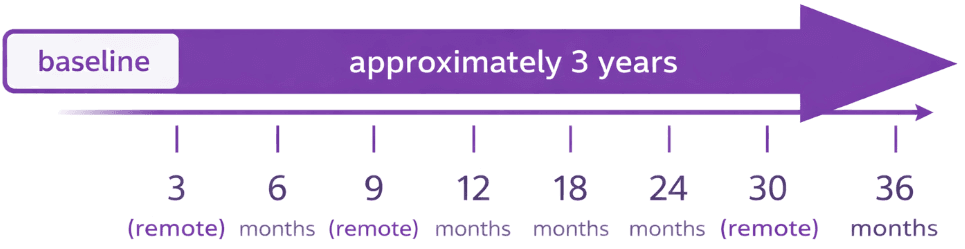
Planned for 3 years between the 1st and last visit
Type
International, non-interventional
Countries
7 countries involved
Sites
22 clinical centers
What is CANDID?
How does the CANDID study work?
As an observational study (and not interventional), participants are followed over several months during which they continue to receive their usual medications and specific care.
Participants with CDD and their parents complete an initial clinic visit at their preferred site, referred to as the baseline visit. All subsequent study visits are conducted either on-site in the clinic or remotely by phone.
CANDID study partners
Consortium and governance information
End of 2021, the Loulou Foundation, announced that seven biopharmaceutical industry partners, together with the Loulou Foundation, had formed a pre-competitive consortium to direct a key clinical study for the development of disease-modifying therapeutics for CDD. The seven companies are Amicus Therapeutics; Biogen Inc.; Elaaj Bio; Immedica Pharma AB (formerly Marinus Pharmaceuticals Inc.); PTC Therapeutics; Ultragenyx Pharmaceuticals Inc. and UCB (formerly Zogenix Inc.). The seven partners share the funding and governance of a 3-year observational study with CDD patients, called CANDID.
The Loulou Foundation serves as the study coordinator.
Patients groups and families
Where are our study sites located?
Overall, CANDID involves 21 clinical centers from 7 countries
Study objectives
What this study aims to identify for future trials?
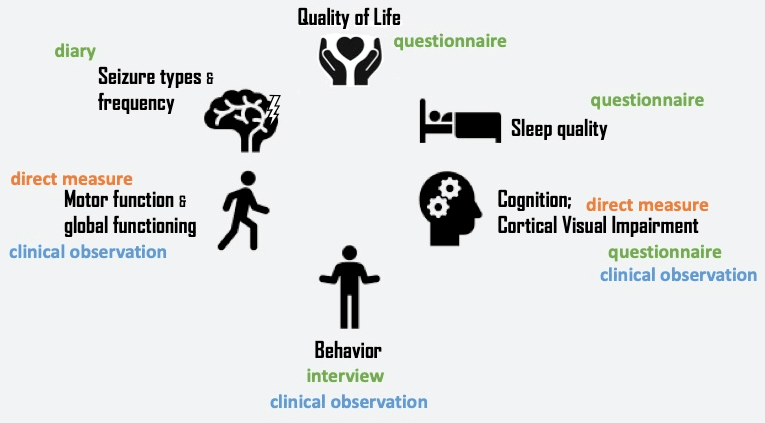
The purpose of this study is to identify the best motor, cognitive and behavioral clinic measures in assessing their suitability (e.g., feasibility, floor/ceiling effects) with CDD patients, and their adaptability across a variety of countries and languages for future international clinical trials.
Outcome measures
Selection principles and what the measures assess
We prioritized the use of already known scales and measures with regulatory precedent in similar contexts as this may allow future sponsors to expedite drug development in CDD.
These selected measures will be administered on a number of occasions and will assess a wide range of skills including cognitive performance, behavior, global functioning, as well as the parent's perception of their child's independence and quality of life.
This type of study will help de-risk a broader assessment selection for early and late phase clinical trials.
Study Results
Clinical outcomes and participant characteristics
Despite the use of 1–6 antiseizure medications, daily seizure frequency ranged from 1 to 5.
Age-related skill development was observed in language, interpersonal relationships, and motor functions, as evaluated by a measure called Vineland-3.
Most of the tested measures effectively captured disease-related deficits and the differences between the participants across different ages.
Contact us
For any questions regarding the CANDID study